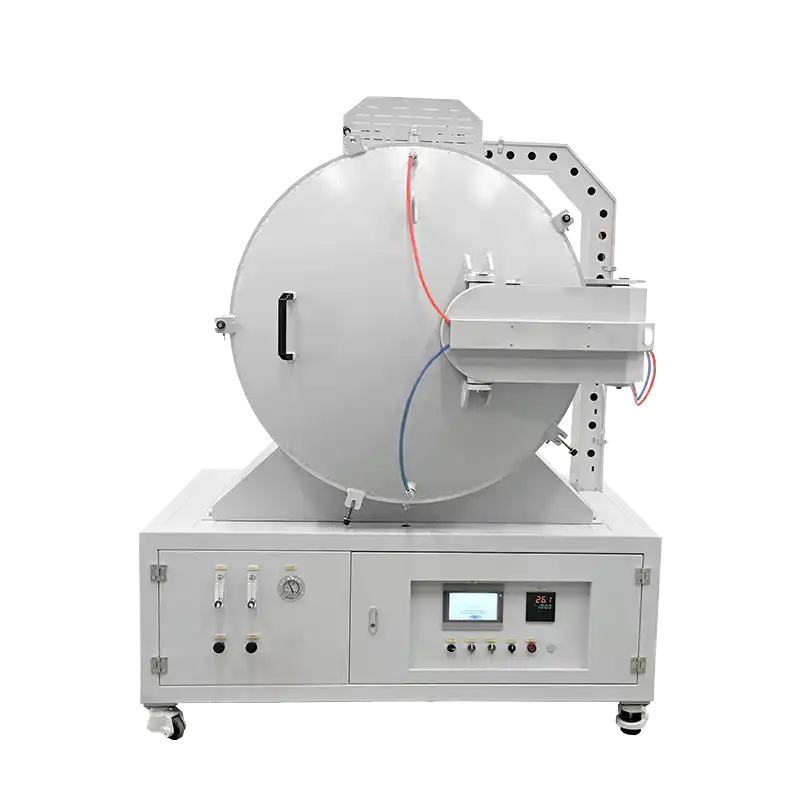
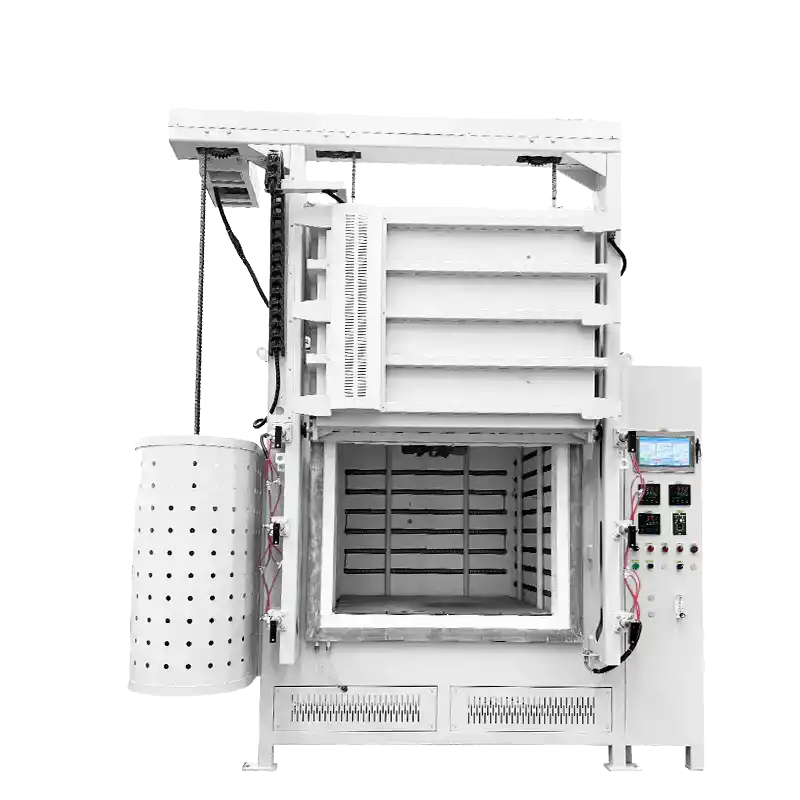
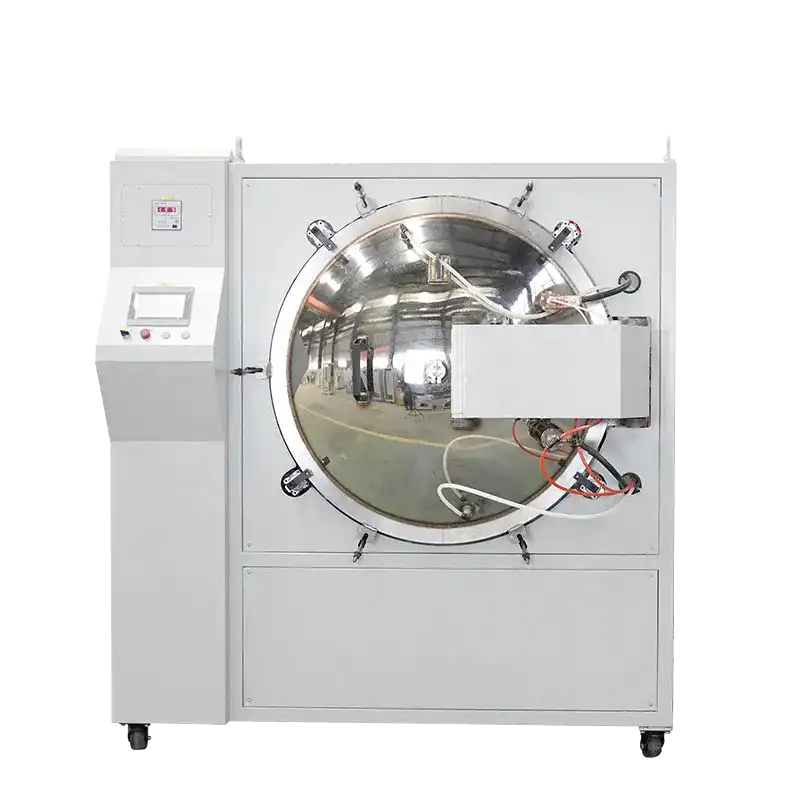
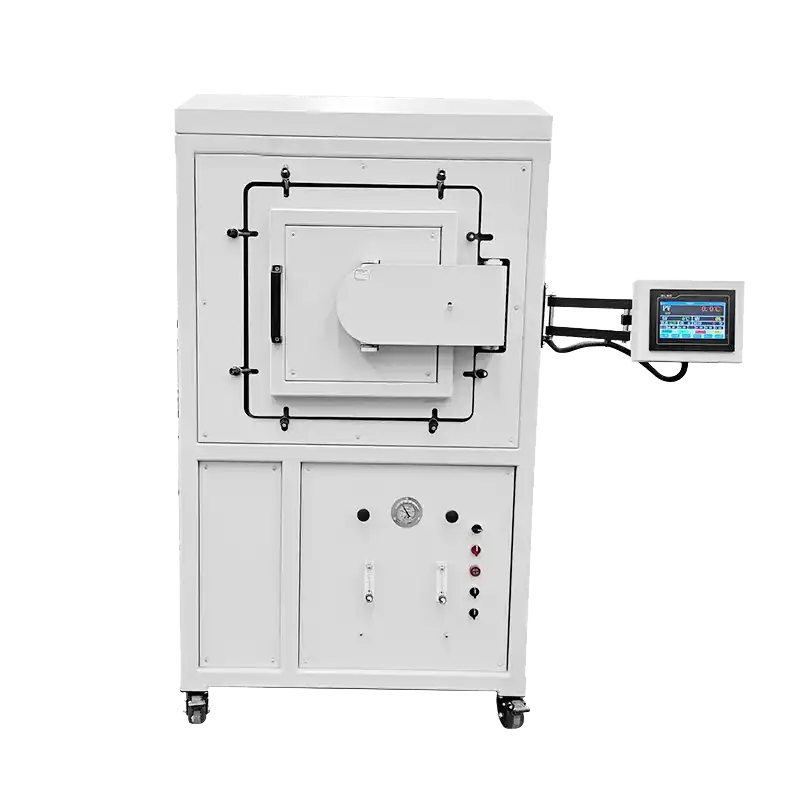
1200°C precision debinding box-type electric furnace with 6-channel independent gas intake and program‑linked exhaust. Heating rate is adjustable from 0.1 to 40°C/min, with 30/50-segment programmable temperature control and dual-circuit protection. The furnace chamber is made of corrosion‑resistant alumina refractory bricks and can be equipped with an exhaust gas purification device for VOC treatment, suitable for stable use in both laboratory and small‑batch production environments.
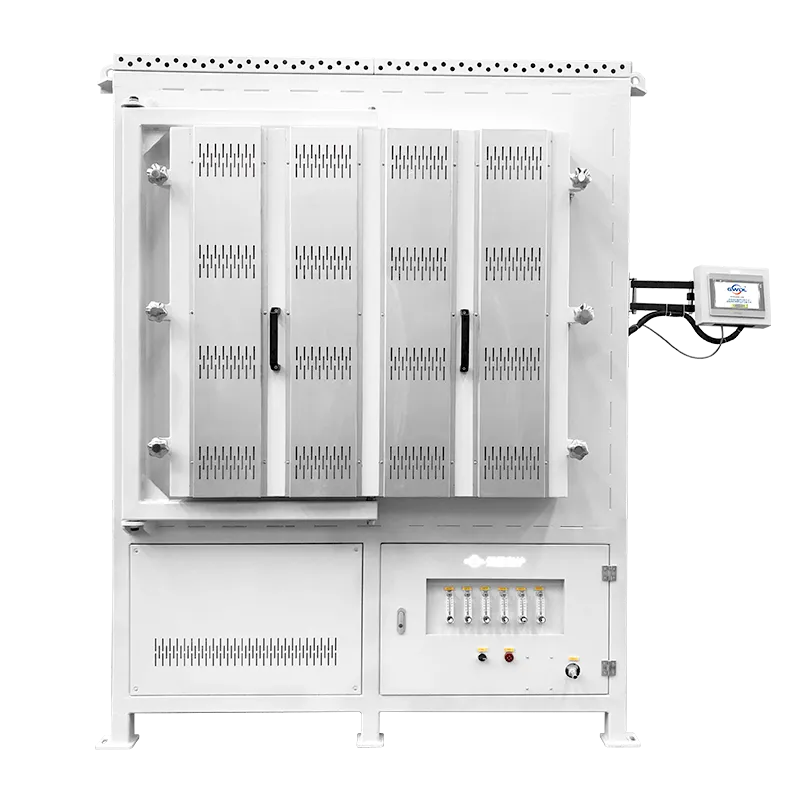
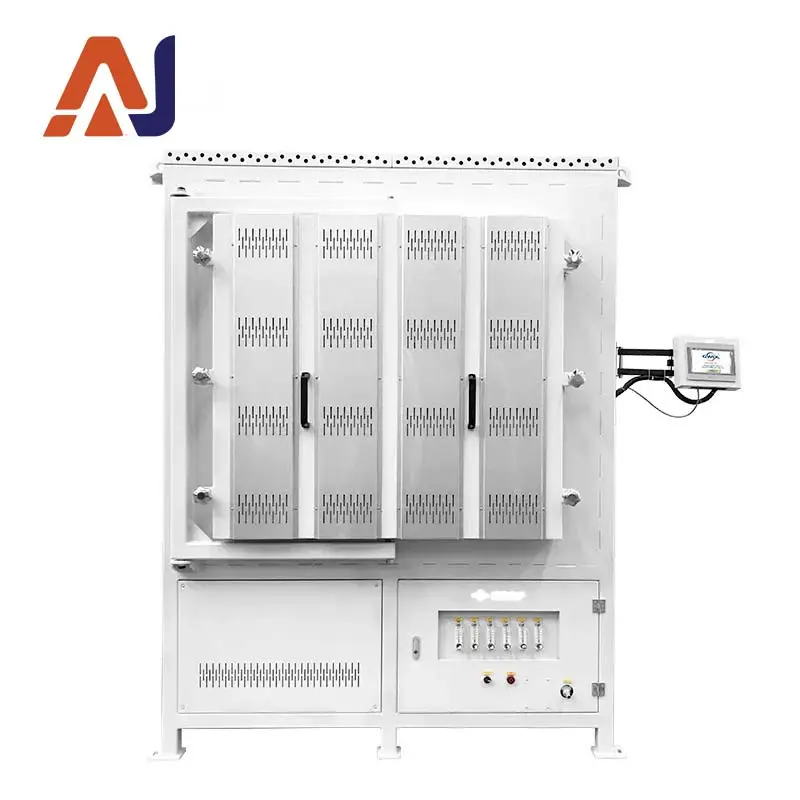
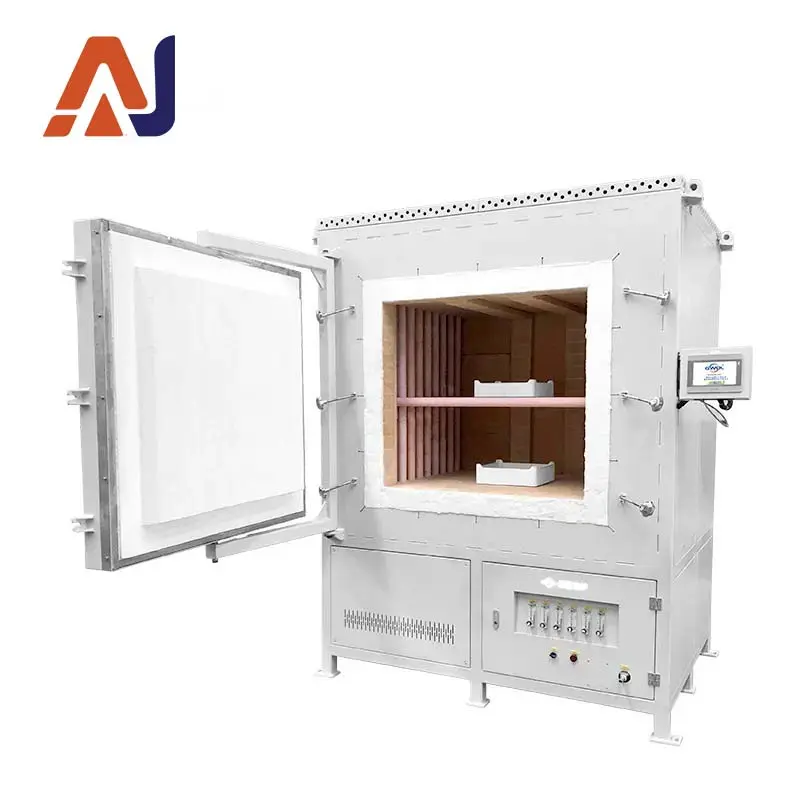
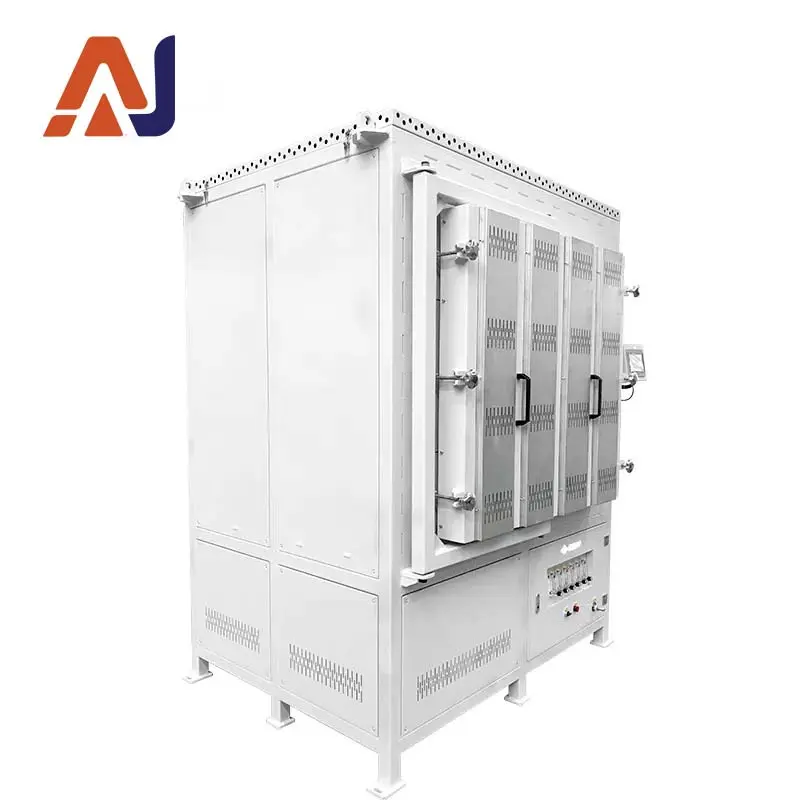
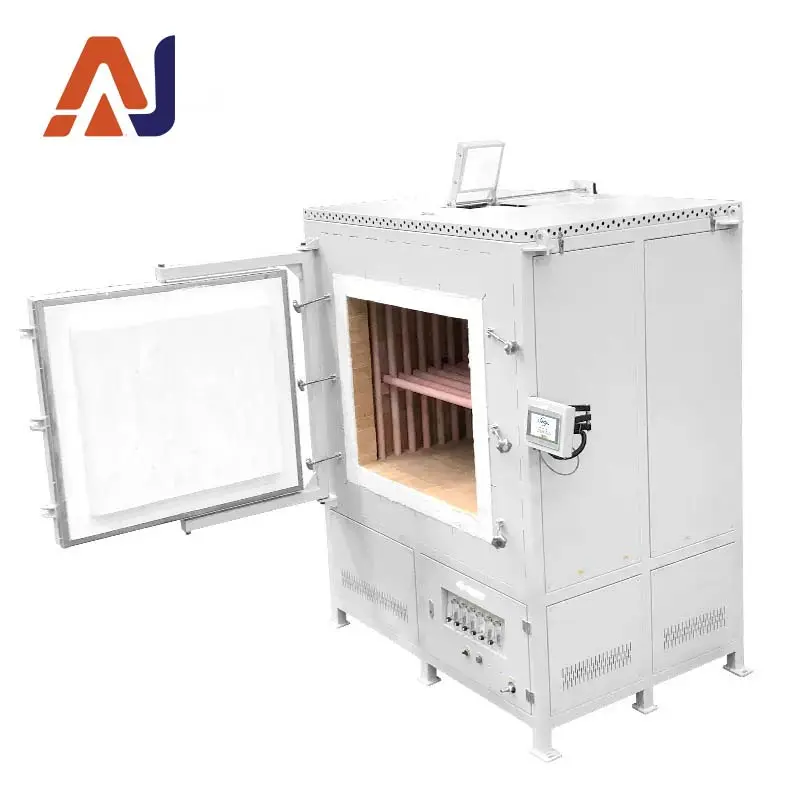
The 1200°C high-temperature furnace integrates the control system and furnace chamber into one unit. The furnace lining is made of vacuum-formed high-purity alumina lightweight material.
Silicon carbide rods are used as heating elements. This furnace is specially designed for laboratories in universities and research institutes, as well as industrial enterprises, for sintering, melting, analysis, and production of ceramics, metallurgy, electronics, glass, chemicals, machinery, refractories, new material development, special materials, building materials, metals, non-metals, and other chemical materials.
The control panel is equipped with an intelligent temperature controller, power switch, main heating start/stop buttons, voltage and current meters, and a computer interface for real-time monitoring of the system status. The product uses reliable integrated circuits, providing a good working environment with strong anti-interference capability. The outer shell temperature is ≤45°C even at the maximum operating temperature, greatly improving the working environment. It features microcomputer program control with programmable temperature curves and fully automatic heating/cooling. Temperature control parameters and programs can be modified during operation, offering flexibility and ease of use.
Temperature control accuracy: ±1°C without overshootConstant temperature accuracy: ±1°CFast heating rate: maximum ≤45°C/min
The furnace chamber is entirely made of corrosion‑resistant high‑purity alumina material, offering high usable temperature, low heat storage, excellent thermal shock resistance, no cracking, no slagging, and good thermal insulation (energy saving is more than 60% compared with traditional electric furnaces). The structure is reasonable with inner and outer double-layer furnace shells and air-cooled heat dissipation, which can greatly shorten the test cycle.
| Category | 1200°C |
|---|---|
| Maximum Operating Temperature | 1000°C |
| Long-term Service Temperature | 800°C |
| Control Range | 80°C to 800°C |
| Temperature Sensor | Platinum-Rhodium S-Type Thermocouple, measuring range 0–1600°C |
| Heating Element Position | Vertically installed on both inner sidewalls of the chamber (with protective sleeves) |
| Temperature Control Accuracy | ±1°C (Integrated circuit control, no overshoot) |
| Temperature Uniformity | ±1°C (depending on chamber size; large chambers can achieve better uniformity through multi-zone control) |
| Heating Rate | Adjustable: maximum 40°C/min, minimum 1°C/h |
| Heating Element | Silicon Carbide (SiC) heating rods (please specify quantity and configuration - number of rods and groups). Equipped with ceramic protective tubes. |
| Furnace Body | CNC-machined, finished by polishing, grinding, pickling, phosphating, powder coating, and high-temperature baking. Two-tone aesthetic design, offering oxidation resistance, acid/alkali resistance, corrosion resistance, high-temperature resistance, and easy cleaning. |
| Furnace Structure | Air-cooled double-layer structure. Effective air-guiding baffles enable overall cold-air circulation, cooling the heating element terminals before exhausting to prevent high-temperature oxidation and ensure a good working environment. |
| Door Opening | Axial 180° side-opening door, rotatable 360° to prevent arm burns from the hot inner door during loading/unloading. Bottom-mounted stainless steel spring latch ensures secure locking, accommodates refractory expansion for free thermal movement, and maintains an effective seal. |
| Refractory Material | Corrosion-resistant high-purity alumina refractory brick lining. |
| External Shell Temperature | < 45°C during continuous long-term operation |
| Exhaust Port | Automatic exhaust vent located at the top of the furnace, capable of opening/closing automatically based on programmed sequences. |
| Gas Inlets | 6 gas inlets located on both sides of the chamber, each controlled by an individual float-type flow meter. |
| Automation Program | Equipped with a 7-inch touch screen and Siemens PLC, enabling automatic opening/closing of inlets/exhaust ports during programmed heating cycles. |
| Protection Functions | Integrated modular control unit with dual-loop control and protection. Includes: Overshoot, Overrun, Undershoot, Thermocouple Break, Phase Loss, Overvoltage, Overcurrent, Overtemperature, Current Feedback, and Soft Start protection. |
| Control Method | Closed-loop thyristor (SCR) module trigger control (phase-shift or zero-crossing). Output voltage, current, and power are continuously adjustable with constant voltage, current, or power operation. Dual-loop regulation (inner current loop + outer voltage loop) limits output to the rated range during load transients or overcurrent, protecting heating elements from excessive current/voltage surges and ensuring safe, reliable, and precise control. |
| Display Parameters | Real-time temperature, segment number, segment time, remaining time, output power percentage, voltage, current, etc. |
| Temperature Profile Setting | Intelligent temperature controller with multiple control modes: standard PID, AI adjustment (APID), or MPT. Features self-tuning/self-learning with no overshoot/undershoot. 30-segment program control for any heating/cooling slope. Supports commands like jump (loop), run, pause, stop, and allows on-the-fly program modification. AI algorithm with curve-fitting ensures smooth profile control. |
| Multi-Curve Program | 30-segment program (customizable to 50 segments). Supports: 1 curve (30/50 seg.), 2 curves (14/28 seg. each), 3 curves (9/15 seg. each), 5 curves (5/9 seg. each). Multiple curves can be stored and recalled as needed. |
| Communication Interface | RS485 communication interface with a range up to 1200 meters. Enables computer control for operations like start/pause/stop, profile programming/loading, parameter setting. PC software provides rich display including PV, SV, output, segment time/number, temperature/power curves. Allows saving, recalling, and modifying profiles. Features historical curves and logs with configurable recording intervals (1 second to 1 hour) for long-term storage. |




.webp)